2 Weeks of Bikepacking in Tuscany – Nature, Adventure, and Culinary Delights
- Lonely Trails
- Oct 10, 2024
- 13 min read
Updated: Oct 11, 2024

Why You Should Definitely Ride the Tuscany Trail
From the Tyrrhenian coast to the Apennines in the heart of the region, Tuscany offers a postcard-perfect landscape – rolling hills, vineyards, forests, and olive groves as far as the eye can see. In addition to big names like Florence, Pisa, and Siena, there are also smaller towns like San Gimignano and Pitigliano, which shine with medieval castles, cozy squares, and their own unique charm. Tuscany is practically a collection of UNESCO World Heritage sites. And of course, it wouldn’t be complete without its amazing cuisine and the world-famous Chianti – a true paradise for food lovers!

In May, I set off from Florence on a journey through Tuscany. From there, I rode through the Chianti region – characterized by vineyards, rolling hills, and small, authentic villages. After a detour to Siena, the route continued through Tuscany's varied landscapes all the way to the coast at Orbetello. Following the coastline, I eventually reached Piombino, where I caught the ferry to Elba. The island itself offered amazing trails and views, which I spent five days exploring. Back on the mainland, I took the train from Piombino to Bologna, where I wrapped up the trip with two relaxing days in the city. Altogether, I covered 620 km and 9,080 meters of elevation gain on this tour.
1: From Munich to Florence: A Relaxing Train Journey
Train travel can sometimes be nerve-wracking – especially if you're familiar with the chaos of the German railway system. So, I prepared myself for the worst when planning my trip from Munich to Florence. But fortunately, everything went smoothly. The journey started with a train departing Munich right on time, and it took me comfortably all the way to Verona. Having reserved a space for my bike in advance, I was able to store it without any hassle. The transfer in Verona to a train heading to Bologna was also straightforward. In Italy, regional trains are often reliable and have plenty of space for bikes. From Bologna to Florence, it was just a short ride without any issues – overall, a pleasant trip that went better than I expected.

The seven and a half hours passed faster than expected – thanks to the friendly and helpful staff on both trains. Particularly in the Austrian train, the onboard service offered a nice selection of snacks and drinks, making the journey more comfortable.

2: Florence – History, Crowds, and Moments of Tranquility
Florence, the capital of Tuscany, is a true hub of art, culture, and history. With around 380,000 inhabitants, it feels manageable yet vibrant, especially thanks to the many visitors who flock to the city each year. As I wandered through the streets, I could almost feel the legacy of the Renaissance. The Cathedral of Santa Maria del Fiore, with its famous red dome designed by Filippo Brunelleschi, is one of the city's most iconic landmarks. The medieval Ponte Vecchio, spanning the Arno River, is another must-see – not just for its stunning architecture but also for the numerous goldsmith shops that line it.


Despite the crowds of tourists, there were a few places where I could truly experience the magic of the city. The Piazza della Signoria, with its impressive sculptures, including a replica of Michelangelo’s David, feels almost like an open-air museum. One special moment of peace and beauty came on the Piazzale Michelangelo – a panoramic view of the city that reveals Florence in all its glory. It’s no surprise that Florence’s historic center has been a UNESCO World Heritage site since 1982.


good, and the setting had its own charm. However, the staff was rather unfriendly, and I had to pay extra fees for everything – even storing my bike cost extra, which had never happened to me in any other accommodation. It felt a bit like the room was offered online at a low price, only for you to be charged for every little thing once you arrived.

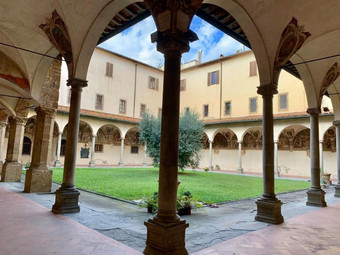


As for the guests, it’s important to know that staying in a hostel often means being around a younger, party-going crowd. While I still consider myself part of the younger generation, I can do without such disturbances during my bikepacking trips. In my case, I was in a four-bed room with an older lady and two younger guys. Around two in the morning, the two drunken guys returned to the room, wandered around aimlessly, and were quite loud – not exactly ideal when you’re trying to get up early the next day.
At least I learned that night that it’s nearly impossible to quietly climb into a top bunk while drunk in the dark. A true balancing act, which was worth a few laughs, at least for the others in the room.
3: The Chianti Panorama – Just a Stone's Throw from Florence
The Chianti Region is located just about 30 kilometers south of Florence and is an absolute highlight for anyone wanting to explore the Tuscan countryside. Once you leave the city behind, you’re greeted by rolling hills covered in olive groves and vineyards – a quintessential Tuscan postcard view. On the winding roads, you pass through small villages, ancient estates, and medieval castles. The region is, of course, best known for its Chianti wine, which is produced here. In many of the wineries (cantinas), you can sample the wine on-site and learn more about the production process – a must for any wine lover.


The view of the hilltops and the wide valley, with its colors changing depending on the time of day and season, offers a breathtaking contrast to the vibrancy of Florence. It’s worth taking your time to explore the small roads and paths.

After about an hour and a half, I reached my first stop: San Gimignano. The town rises majestically on a hill and is famous for its medieval towers. Originally, the city had over 70 towers, which served as status symbols for wealthy families. Today, 14 of those towers still remain, typically reaching heights of about 45 to 54 meters. The narrow streets and historic atmosphere immediately transported me to another time. I enjoyed strolling through the cobblestone streets and discovering the charming little shops and cafés..

After spending some time sightseeing in San Gimignano, I stumbled upon Gelateria Dondoli by chance. The long line in front of the shop and the numerous visitors taking selfies with their ice cream cones piqued my curiosity.

In my conversation with the owner of Gelateria Dondoli, it quickly became clear why this place is so incredibly popular. The owner, Sergio Dondoli, shared with me the fascinating story behind the shop’s success. For many years, he has been passionately working to create the perfect gelato. This dedication has earned Gelateria Dondoli worldwide recognition, with numerous prestigious awards to its name. What’s particularly impressive is that Sergio Dondoli has won several world championships in gelato-making and is now considered one of the most outstanding gelato artisans in the world.

4: Siena: A City of History, Tradition, and Impressive Architecture
After leaving the Chianti region with its vineyards, small villages, and ancient estates behind, I headed to Siena. The city immediately had a different atmosphere – vibrant, historical, and with its own unique charm. While Chianti feels more peaceful and laid-back, Siena instantly felt like a place with many stories to tell.
My first stop was the Piazza del Campo, a square that impressed me right away. Its unusual shape and the many details surrounding it make it a real eye-catcher. What I found particularly fascinating is how important the Palio di Siena, the traditional horse race, is to the city. You can really sense how the people here are deeply invested in it and how much this event means to them.

But Siena has even more to offer. The Siena Cathedral was one of the highlights for me. Even from the outside, it’s impressive and invites you to take a closer look. And inside – just wow. Intricate frescoes, countless small details, and the architecture make the visit a truly special experience. I could have easily spent hours there, soaking it all in. Siena definitely surprised me in a positive way and really left me in awe.

5: Unplanned Encounters and Small Surprises
The day started with a little surprise. Ever since the cable of my bike’s gear shifter snapped in the Chianti region, I’ve been checking my bike every morning for possible issues. And, as luck would have it, that morning I was greeted with my first flat tire.
After patching the tire, I headed into the city to get a new spare tube. Since it was still early and the shops hadn’t opened yet, I took the opportunity to enjoy Siena in peace before the masses of tourists arrived.

Eventually, I left Siena behind and continued cycling. By chance, I arrived in San Quirico d'Orcia, a charming little village with a fantastic view over the Tuscan landscape. The golden wheat fields and the rows of cypress trees stretching into the distance were simply breathtaking – I couldn’t get enough of the view. The village itself was incredibly peaceful, with not a soul in sight, which made the atmosphere even more serene.
Next, I arrived in Pienza, a beautiful Renaissance town with a historic center shaped by Pope Pius II, which is now a UNESCO World Heritage site. In the town, I tried the famous Pecorino cheese and strolled through the narrow streets before getting back on my bike.


The day unfolded without a specific destination, just the freedom to go wherever the road took me. But eventually, it got dark, and I had to face the question of where I would spend the night. As I rode through Radicofani, I noticed many participants of the Tuscany Trail, the world’s largest bikepacking event, looking for accommodations. So, I decided to also search for a place to stay there.

Unfortunately, it turned out that all the accommodations were fully booked. But then I got lucky: I met an Italian who lived in Germany and was also participating in the Tuscany Trail. He kindly offered to help me find a place to stay.
Thanks to his support, I eventually found shelter with a very hospitable family and was able to end the day on a relaxed note.

6: The Mediterranean in Sight
I’m usually an early riser, but today was even earlier, as I had about 130 kilometers ahead of me. My goal was clear: to reach the Mediterranean. After a quick breakfast, I hopped on my bike and left Radicofani behind. The fresh morning air made for a pleasant start, and with the first downhill kilometers, I was able to pick up good speed – a motivating beginning for the long ride ahead.
The route took me through the Val d'Orcia, and along the way, I made a stop in Pitigliano. The town, also known as "Little Jerusalem" due to its Jewish history, is spectacularly perched on a tuff stone cliff overlooking the surrounding valleys. The towering walls carved into the rock and the sea of houses clinging to the edge of the slope offered a view I would remember for a long time. The interplay of light and shadow in the narrow streets, and the unmistakable tuff stone from which the buildings are made, gave Pitigliano a rugged charm that immediately captivated me.

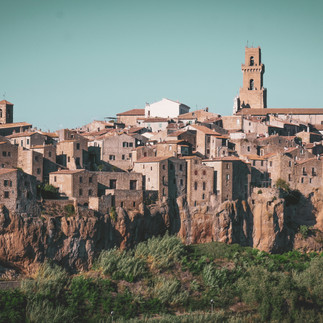


After this impressive scenery, I continued my ride as the landscape noticeably changed. The hills became flatter, pine forests appeared, and the closer I got to the sea, the more I felt like I was heading toward my goal. The final kilometers to Orbetello were fairly flat, which was a welcome change after the climbs of the past few days. When I finally reached the lagoon of Orbetello, it was a great feeling – the sea in sight and the salty air filling my lungs.

7: Coastal Ride, Speedboat, and Island Vibes
The route followed the coast leisurely towards Piombino. The roads were quiet, and with the sea always in view, the kilometers flew by quickly. Piombino itself is a typical port town and the main departure point for ferries to Elba. From here, both regular ferries and faster speedboats make the crossing to Portoferraio on Elba in about 40 minutes. However, it wasn’t easy to keep track, as with several ferry operators – including Moby Lines, Toremar, and Blu Navy – prices and schedules vary greatly depending on the season. Tickets can be conveniently purchased online or directly at the port, but choosing the right option can be a bit confusing. For regular ferries, prices typically range from €15–25 per person, and there are frequent departures throughout the day.

My original plan was to take a regular ferry, but at the ticket counter, no one could tell me exactly which boat would take my bike – which I found odd, considering the large ferries have no trouble transporting cars, trucks, campers, and motorcycles. I probably just ended up at the wrong counter. So, I eventually found myself on a speedboat, which was faster but likely more expensive. On the return trip, I took a regular ferry, which was both more relaxed and – presumably – cheaper.

8: Arriving on Elba
Elba, Italy’s third-largest island and part of the Tuscan Archipelago, welcomed me with its typical Italian island charm. The island not only offers a fascinating landscape but also has a rich and eventful history. After his abdication in 1814, Napoleon spent about ten months in exile here before leaving the island in February 1815 to return to France and begin his "Hundred Days" reign. However, Napoleon was not idle during his time on Elba: he reorganized the island’s administration, improved its infrastructure, built roads and public buildings, and introduced reforms in the mining industry. His brief stay on Elba left a noticeable impact on the island.
Another darker story is tied to the Martello Tower ("Torre del Martello"), where the anarchist Giovanni Passannante was imprisoned under extreme conditions. In 1878, Passannante attempted to assassinate King Umberto I of Italy and was subsequently imprisoned on Elba. His cell was damp, dark, and without access to light, leading to his mental and physical decline. He died in 1910 after years of suffering and isolation in this tower.


My Campsite, Enfola, was located in a small bay on the northern coast with a great view of the sea – the perfect starting point to explore the island by bike. However, the tours weren’t without their challenges. Elba is hilly, and numerous motorcyclists often zoomed past me, as the island is a popular destination for short motorcycle trips. This made cycling a bit demanding at times. The infrastructure is also somewhat limited: there are only a few supermarkets, so I stocked up on food for several days to avoid having to go back to Portoferraio every time. Prices on the island are higher than on the mainland, and while there are many restaurants, eating out can get expensive quickly if you don’t cook for yourself.


I set off on my bike to explore every corner of Elba. The island offers so many different aspects: steep climbs, tight curves, and diverse landscapes, from hills and pine forests to small, sleepy villages. One of the highlights for me was the ride up to Monte Capanne, the highest point on the island, where you get a breathtaking view of Elba and the surrounding islands.


Of course, a visit to the beaches was a must. I was particularly impressed by Sansone Beach, which was just a few kilometers from my campsite. Crystal-clear water, white pebbles, and the imposing cliffs in the background made this beach a true paradise.

I took the time to stroll through Portoferraio, explore the historic old town, and enjoy the view from Forte Stella. Other places like Capoliveri, a small hilltop village, and Marina di Campo with its long sandy beach were also on my list. My days on Elba were a mix of relaxed bike rides, exciting discoveries, and plenty of time by the water – a perfect change of pace after the long rides on the mainland.
9: Bologna – La Dotta, La Grassa, La Rossa: The Grand Finale of My Trip
After five days on Elba, it was time to leave the island. I took the regular Moby Line ferry back to the mainland. The trip was pleasant and offered one last beautiful view of Elba's coast before I arrived in Piombino. From there, I took the train to Bologna – a stark contrast to the relaxed island atmosphere.

Bologna, the capital of the Emilia-Romagna region, is nicknamed "La Dotta, La Grassa, La Rossa" – the Learned, the Fat, the Red – and you can feel it in every corner. "La Dotta" refers to the University of Bologna, the oldest in Europe, founded in 1088. And it’s immediately clear: without the university, Bologna would only be half as lively. The students shape the city, fill the streets, sit in the cafés, and give Bologna its youthful, energetic vibe.


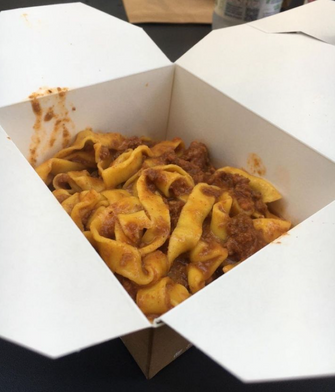
La Grassa" describes the city's culinary side, as Bologna is famous for its fantastic cuisine – and I noticed that right away. For example, I had the best Tagliatelle al Ragù of my life at the Ragū deli. The freshly prepared pasta, combined with the rich sauce, was a real treat. And as if that wasn’t enough, I also indulged in a Zabaione coffee at Aroma Specialty Coffees. Zabaione, that Italian egg foam often refined with Marsala, pairs perfectly with espresso – sweet, creamy, and just different. This specialty fits perfectly with Bologna’s culinary offerings, which are rich, inviting, and unique.


The city is also known as "La Rossa," thanks to the red brick architecture that gives it its distinctive appearance. A walk through Piazza Maggiore, the heart of the old town, showed me the variety of impressive historical buildings, including the Basilica of San Petronio. From there, I explored the lively Quadrilatero, a district full of narrow streets, market stalls, and delicatessen shops that reflect Bologna’s culinary traditions.
Another highlight was the hidden canals that can be discovered in certain parts of the city. Particularly the Finestrella, a small window on Via Piella, gave me a view of an old canal, offering an unexpected glimpse into historic Bologna.

My stay in Bologna was the perfect way to end my trip – a mix of culture, cuisine, and discoveries that made every minute exciting. A city that surprises and delights in every way.
Tipps für deine Bikepacking-Tour durch die Toskana
Planning the Route: Tuscany is diverse and offers both relaxed and challenging routes. Plan your stages so that you have enough time to explore both the cities and the countryside.
Accommodations: In popular tourist spots like Florence or Siena, it’s a good idea to book accommodations in advance, especially if you value comfort. However, there are also charming spontaneous options – just be aware that you may need to improvise at times.
Equipment & Bike: Tuscany offers various terrain – from smooth roads to gravel and forest paths. A gravel bike or mountain bike with all-round tires is ideal. Don’t forget to bring spare tubes, tools, and repair kits in case something breaks down along the way.
Food: The region is known for great food, so take the opportunity to try local products. You’ll find many small shops, markets, and restaurants along the way, so don’t worry – you won’t go hungry.
Best Travel Time: Tuscany can get very hot in the summer. May and September are ideal – pleasant temperatures, fewer tourists, and a blooming or golden landscape.
Reserve Bike Spaces: If you’re traveling with ÖBB or Trenitalia, it’s best to reserve bike spaces in advance. Capacity is limited, especially on long-distance trains, and it can be difficult to find a spot without a reservation. Bike transport is often simpler on regional trains.
Regional Trains vs. Long-Distance Trains: Trenitalia's regional trains are ideal for spontaneous trips with a bike, as reservations are usually not required. On long-distance trains like the Frecce trains, check in advance if bikes are allowed, as the rules are often stricter.
Book Tickets via Apps: The easiest way to book tickets and bike spaces is through official apps like "Trenitalia" or "ÖBB." This way, you always have your bookings at hand, and you can quickly search for connections or make changes.
Buy Bike Tickets: On regional trains, you often need a separate ticket for your bike, which you can also buy directly through the app. Make sure this ticket is valid for the train you’re taking.
Transfers and Connections: Allow enough time for transfers, especially with a fully loaded bike. Train stations in Italy can be large, and elevators aren’t always available – so be prepared for stairs.

Comments